Teaching & Trainings
Teaching & Trainings
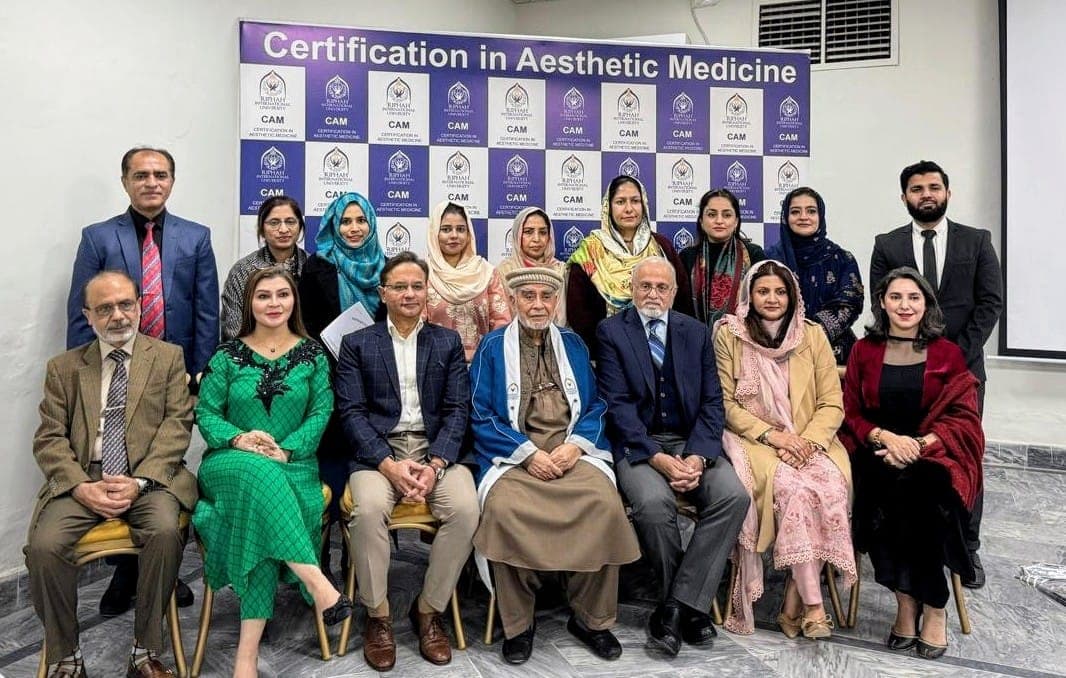
Pakistan Railway Hospital, Riphah International University
“I don't teach doctors simply to perform procedures. I teach them to assess, think, plan and treat safely.”
Learn more than a technique. Build clinical judgement.
- Teaching & hands-on training of Aesthetic Medicine
- Teaching & training of Dermatology for GPs, Family Physicians, & PGs
- At Pakistan Railway Hospital, Riphah International University
Learn science. Master the technique. Treat with confidence.
For details, contact Miss Sana
Questions about the training
Is aesthetic medicine just about learning how to inject?
Absolutely not.
Aesthetic medicine begins with understanding facial anatomy, skin biology, patient selection, indications, contraindications, treatment planning and expected outcomes. Injection technique is only one part of becoming a safe and competent aesthetic physician.
Can I learn aesthetic procedures from lectures alone?
Knowledge comes from learning. Confidence comes from doing.
My training combines structured lectures with supervised, hands-on experience, allowing doctors to understand not only what to do, but why, when and how to do it.
What will I get in hands-on experience?
Hands-on training is at the heart of my teaching.
The trainees will have the opportunity to observe & practice different techniques under direct supervision on patients & SPs, with an emphasis on safe, precise and anatomically informed practice.
What will I learn beyond the procedure itself?
A good aesthetic physician learns to assess before treating.
Training covers consultation, facial assessment, treatment planning, product selection, injection techniques, anatomy, patient communication, expected outcomes and management of complications.
Why is anatomy so important in aesthetic medicine?
Because every injection has an anatomical consequence.
A thorough understanding of facial anatomy helps physicians work more safely, choose appropriate injection planes and recognize potential risks before they become complications.
Will you teach me how to deal with complications?
Safe practice means being prepared for what can go wrong.
Complication recognition, prevention and appropriate initial management are integral parts of aesthetic medicine training.
Do you teach a “one technique fits all” approach?
No. Every face is different, and every patient needs an individualized plan.
I teach doctors to assess facial proportions, anatomy, concerns and expectations before deciding whether treatment is appropriate.
Who can benefit from my aesthetic medicine training?
My training is designed for doctors (GPs, PGs, Family Physicians) who want to develop or strengthen their skills in aesthetic medicine, whether they are beginning their aesthetic journey or looking to refine their existing clinical techniques.
What makes my approach to aesthetic training different?
I teach aesthetics from a dermatologist’s perspective.
With clinical dermatology and aesthetic medicine at the center of my practice, my approach combines medical knowledge, aesthetic judgement, evidence-based decision-making and practical procedural skills.
Lectures that explain the science.
Hands-on training that develops technique.
Supervision that builds confidence.
For details of training slots, call Miss Sana